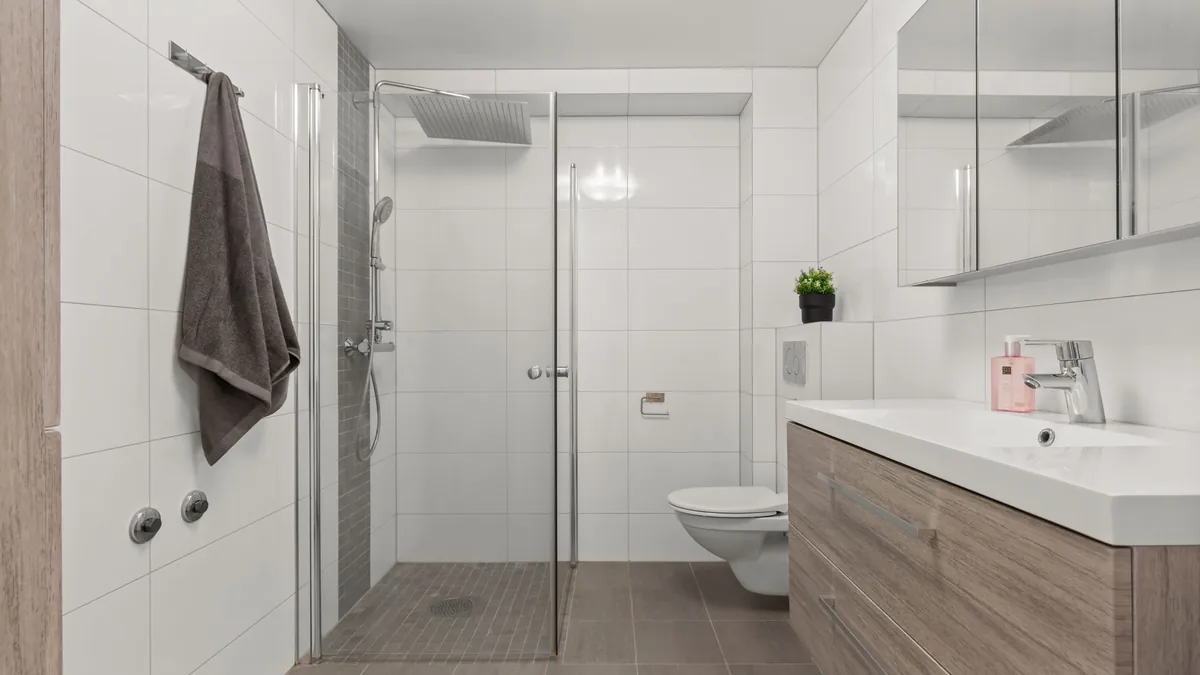
Walk-In Shower Installation in Des Moines, IA
Walk in shower installation means a shower you step into with little or no curb, a floor that slopes to the drain, and glass or an open entry instead of a tub wall. We build walk-in and curbless showers in Des Moines, Beaverdale, Drake, West Des Moines, and Johnston.
- Plumbing and electrical by Iowa-licensed plumbers and electricians
- Permits through the City of Des Moines Permit & Development Center
- Curbless designs checked first
Get a Free Bathroom Remodel Estimate
Tell us what you need — we’ll get back to you fast.
We'll be in touch shortly.
Please call us at (515) 762-5534.
Low Curb or Curbless
A low-curb shower keeps a short threshold, often a couple of inches, that holds water in and is simple to build. A curbless shower has no threshold at all, so the bathroom floor runs straight into the shower. That takes more planning: the shower area has to be recessed below the rest of the floor so water still flows to the drain, and the waterproofing has to extend past the shower opening.
Over a basement or crawl space, the joists can often be lowered or notched within limits to recess the base. On a slab or in some condo buildings it is harder. We look at the structure before recommending one or the other, and we tell you plainly if curbless is not practical in your room.
What Makes a Walk-In Work
Slope
A floor pitched to the drain so water never reaches the room.
Linear Drain
A long drain that lets the floor slope one way.
Membrane
Waterproofing that extends past the shower opening.
Glass
A fixed panel or door sized to keep spray in.
The Process
How a Walk-In Shower Gets Built
Structure Check
We look under the floor to see if a recessed base is possible.
Demo and Framing
Old shower or tub out; joists adjusted where allowed.
Rough-In
Drain and valve by Iowa-licensed plumbers and electricians; inspection by the City of Des Moines Permit & Development Center if required.
Waterproof and Finish
Membrane, flood test, tile, and glass.
Plumbing, Permits, and Licensing
A walk-in shower usually needs a new drain, often a linear one, and a new valve. In Iowa, plumbing work is licensed by the Iowa Plumbing and Mechanical Systems Board under Iowa Code chapter 105, and electrical work, such as a new light or fan circuit, falls under the Electrical Examining Board. We use Iowa-licensed plumbers and electricians and hold Iowa contractor registration (Iowa Code chapter 91C).
When framing or plumbing changes need a permit, we file it with the City of Des Moines Permit & Development Center and schedule inspection before the floor and walls are closed.
Keeping Water Where It Belongs
Without a curb, the floor slope and the drain do all the work. A linear drain along the back wall or at the entry lets the whole floor pitch in one direction, which also suits large-format tile. The membrane runs up the walls and out past the opening, and the base is flood-tested before tile. Glass placement matters too: a fixed panel that covers the shower head side keeps most spray in without a door to swing.
Ventilation matters more with an open shower. We size the exhaust fan to the room and duct it outside, which is important in a Des Moines winter, with cold, dry Iowa winters with lows that often drop below 0 F, when warm, wet air can condense in a cold attic.
Designed for Now and Later
Many homeowners choose a walk-in shower to plan ahead for aging in place, or for a family member who uses a walker or wheelchair. A curbless entry, a wide opening, a bench, a handheld shower, and blocking for grab bars make the shower usable for everyone without looking clinical. Slip-resistant tile and good lighting finish the job.
Rebuilding an existing stall without changing the entry? See shower remodel. Removing a tub to make room? See tub-to-shower conversion. Redoing the whole room at once? See full bathroom remodeling.
Schedule and Disruption
A walk-in shower usually takes one to three weeks after materials arrive, depending on whether the floor has to be recessed. That includes membrane cure time, a flood test, and any inspection by the City of Des Moines Permit & Development Center. The toilet and sink usually stay in service. We give you the schedule in writing at the estimate, seal the work area from the rest of the house, and clean up every day.
Questions to Ask Before You Commit
Ask whether your floor can be recessed for a curbless entry, and what happens if it cannot. Ask where the drain will go and how the floor will slope. Ask how far the waterproofing extends past the opening and whether the base is flood-tested. Ask who does the plumbing and whether that person holds an Iowa license. Clear, written answers to those questions are the best predictor of a walk-in shower that stays dry.
Common Questions
Walk-In Shower Questions
How much does walk in shower installation cost?
A low-curb shower costs less than a curbless one, which may need floor framing changes. Tile, glass, and drain style also matter. Permits through the City of Des Moines Permit & Development Center are included in our written estimate when the work needs them, so the price is clear upfront.
Can any bathroom have a curbless shower?
Not always. The shower base has to sit lower than the floor so water drains properly. Over a basement or crawl space that is often possible; on a slab it is harder. We check the structure first. Drain work is done by Iowa-licensed plumbers and electricians.
Do walk-in showers need a door?
No. A fixed glass panel covering the shower head side keeps most spray in if the shower is deep enough. A sloped floor with a linear drain does the rest. Any plumbing changes are inspected by the City of Des Moines Permit & Development Center when a permit applies.
Get Started
Ready to step in without a step? Book a free in-home estimate or return to the home page.